For decades, performance enthusiasts have been conditioned to associate speed with cylinder count. More cylinders traditionally meant more power, more prestige, and ultimately more excitement behind the wheel. Yet modern engineering has begun rewriting those assumptions. Today’s best compact performance cars prove that intelligent tuning, sophisticated drivetrains, and advanced chassis technology can create driving experiences that feel far more rewarding than the sum of their parts.
In many ways, compact sports sedans represent the sweet spot of modern performance. They’re lighter than larger luxury sedans, more practical than dedicated sports cars, and often more accessible than high-end performance machines. More importantly, they tend to deliver their performance in ways drivers can actually use every day. Instant turbocharged torque, all-weather traction, and nimble handling frequently matter more on real roads than headline-grabbing horsepower figures.
That’s exactly why certain compact performance cars consistently surprise drivers. On paper, their specifications may seem modest compared to larger rivals. Behind the wheel, however, they deliver a level of acceleration, confidence, and agility that feels genuinely shocking.
UPDATE: 2026/06/23
This article has been updated to include commentary from our test drive of the vehicle.
Why Some Compact Sports Sedans Feel Faster Than Their Specs Suggest

There is something uniquely satisfying about driving a compact performance car quickly. Unlike heavyweight luxury sedans or ultra-powerful supercars, smaller performance machines allow drivers to access more of their capabilities more often. Modern performance cars frequently produce 500 horsepower or more, but using all that power on public roads can be difficult. The limits are so high that drivers rarely experience the full potential of the vehicle outside of a racetrack.
Compact sports sedans operate differently. Their performance envelopes are broad enough to be exciting while remaining accessible in everyday situations. Weight also plays a critical role. A lighter vehicle requires less power to feel responsive. It changes direction more eagerly, brakes more effectively, and generally feels more connected to driver inputs. The sensation of speed often comes from responsiveness rather than outright acceleration.
The Modern Performance Trick That’s Making Small Engines Feel Huge

Advances in engine management, turbocharger technology, and transmission calibration have allowed smaller engines to produce torque figures that rival naturally aspirated six-cylinder engines from only a decade ago. The result is immediate thrust at everyday speeds and impressive fuel efficiency when driven conservatively. Equally important is the practicality factor. Compact performance sedans can tackle morning commutes, grocery runs, long-distance road trips, and spirited weekend drives without compromise. That versatility makes them appealing to enthusiasts who need a single vehicle capable of doing everything. As manufacturers continue refining the formula, some models have become remarkably adept at disguising their specifications.
The 2.0-Liter Secret Behind Its V8-Like Urgency

The 2026 Audi S3 demonstrates just how much performance can be extracted from a modern turbocharged four-cylinder engine. Under the hood sits a 2.0-liter turbocharged four-cylinder producing approximately 328 horsepower and 295 pound-feet of torque. While 328 hp is a healthy figure, it sits well below the output of many modern performance sedans that now exceed 400 horsepower. On paper, the S3 doesn’t appear capable of delivering the kind of urgency it ultimately does.

Audi’s latest evolution of the EA888 engine delivers a broad torque curve that provides strong acceleration throughout the rev range. Rather than requiring constant high-rpm driving, the engine generates meaningful thrust almost immediately. Press the accelerator, and the response feels far stronger than the displacement figure might suggest. The result is a sports sedan capable of reaching 60 mph in roughly 4.4 seconds, putting it within striking distance of performance cars that once relied on naturally aspirated V8 engines with significantly larger displacement. More importantly, the acceleration feels consistently accessible regardless of road conditions or driving situations.
Audi’s seven-speed S tronic dual-clutch transmission plays a significant role in creating this sensation. Gear changes occur with remarkable speed and precision, keeping the engine within its optimal power band. The transmission anticipates driver inputs effectively and delivers immediate downshifts when additional performance is required.
Why It Feels Quick Even When You’re Not Trying

Whether merging onto a highway, overtaking slower traffic, or accelerating out of a corner, the car consistently feels eager and responsive. This accessibility contributes significantly to the perception that the S3 is faster than it actually is. Drivers don’t need to work hard to access its performance capabilities. Yet raw acceleration is only part of the equation. Plenty of powerful cars can produce impressive numbers in ideal conditions. The more important question is how much of that performance actually reaches the pavement, and that’s where the Audi begins to separate itself from many rivals.

10 Most Reliable Turbocharged Sports Cars
Sports car bring the heat with impressive power and performance figures, but are they reliable? Here are ten turbocharged sports cars that are.
The Reason It Can Use More Of Its Power Than Most Rivals

While horsepower figures often dominate performance discussions, traction frequently determines how much of that power can actually reach the pavement. This is where the Audi S3 distinguishes itself from many competitors. The latest version of Audi’s Quattro all-wheel-drive system transforms the driving experience by maximizing available grip in virtually every situation. Unlike front-wheel-drive performance cars that may struggle to deploy power effectively, the S3 puts its torque to work with remarkable efficiency. Launches are particularly impressive. The car hooks up immediately, converting engine output into forward motion without excessive wheelspin or drama. This contributes significantly to the sensation that the vehicle is producing more power than the specification sheet indicates.
The turbocharged engine complements the drivetrain perfectly. Its abundant midrange torque provides strong acceleration from low and moderate speeds, which is where most real-world driving occurs. Rather than waiting for high-rpm power delivery, drivers experience substantial thrust almost instantly. Audi’s updated torque-splitting technology further enhances capability during spirited driving. The system can distribute power more effectively across the rear axle, improving corner-exit traction and allowing the car to accelerate aggressively while maintaining composure.
Where The Performance Gap Gets Even Bigger

Rain, cold temperatures, and less-than-perfect road surfaces have minimal impact on the car’s ability to deliver performance. While rear-wheel-drive rivals may require greater caution, the Audi remains confidence-inspiring regardless of conditions. This consistency is a major part of what makes the S3 feel special. Drivers can access a large percentage of the car’s performance almost all the time. The confidence created by the combination of turbocharged torque and intelligent all-wheel drive makes every acceleration run feel effortless and dramatic.
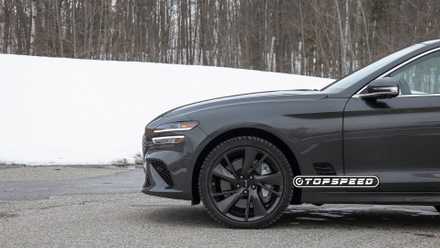
The Sports Sedan With Honda Reliability And Porsche-Like Precision
This undervalued South Korean premium sedan is a trustworthy performance gem.
The Suspension Tuning That Makes It Feel Smaller Than It Is

Straight-line performance may grab headlines, but chassis tuning is what truly separates memorable performance cars from merely fast ones. The 2026 S3 excels because Audi‘s engineers have created a chassis that feels significantly more agile than its dimensions and weight might imply.
Steering response is immediate and precise. Turn-in feels sharp, allowing the car to change direction with minimal hesitation. This responsiveness creates a strong connection between driver inputs and vehicle behavior, making the car feel smaller and lighter than it actually is. Audi’s suspension tuning strikes an impressive balance between comfort and performance. Adaptive dampers continuously adjust to road conditions and driving style, providing compliance during daily commuting while delivering enhanced body control when pushed harder.
Body roll remains well-managed through corners, helping maintain driver confidence during spirited driving. The car settles quickly after transitions and remains composed over uneven pavement, a characteristic that contributes significantly to its real-world speed. The revised rear differential calibration also enhances cornering behavior. Rather than simply maximizing grip, the system actively helps rotate the vehicle through turns, creating a more engaging driving experience. The result is a sedan that feels eager to attack corners rather than merely survive them.

The braking system complements the chassis equally well. Firm pedal calibration and predictable response make it easier to carry speed confidently into corners and manage weight transfer during spirited driving. Rather than simply delivering strong stopping power, the setup contributes to the car’s overall sense of precision and control.
Perhaps most importantly, the S3 communicates effectively. Drivers receive meaningful feedback through the steering wheel, chassis, and seat, allowing them to understand what the car is doing at any given moment. That transparency encourages confidence and makes the vehicle feel exceptionally capable. When a car changes direction this eagerly and responds this predictably, it naturally feels faster. The S3’s agility amplifies every driving experience, making moderate speeds feel exciting and higher speeds feel effortless.
What Our Test Drive Revealed

Our team had the opportunity to test drive the Audi S3, and it was given initial praise at first glance for capturing the subtle Audi design language, whilst also making it clear, though not abundantly, that this was no base model. The slight flares around the body, lowered ride height, and dark badges (on our tester, at least) gave it a certain confidence that doesn’t shout, unless you stand on the accelerator. Though on a lower rung in the Audi-verse, the S3’s cabin can rightfully be judged against Audi’s best and brightest, thanks to sleek interior design, ambient lighting, premium materials and a masterful balance of contemporary and traditional styling and features.
On the road, the S3 didn’t disappoint, with four-second 0-60 MPH sprints from our test, genuine sports sedan handling and road behavior, and, of course, that smooth neutral driving that Audi is known for.
The dual-clutch gearbox offers both manual and automatic modes, with unimaginably quick manual shifts, punctuated by audible “poofs”. During my testing, the S3 repeatedly executed four-second zero-to-60 runs, according to my Omega Speedmaster… Its handling sublimely neutral, the 8Y S3 offers direct turn-in with utter obedience to driver inputs. What’s more, the new torque-splitting rear differential let me get on the throttle earlier to bring the rear end around so I could exit turns carrying more speed.
Why It Makes More Sense Than More Powerful Alternatives

The true brilliance of the 2026 Audi S3 isn’t found in any single specification or performance metric. Instead, it lies in the way all of its components work together to create an experience that consistently exceeds expectations. For buyers considering alternatives such as the Volkswagen Golf R, Mercedes-AMG A35, or BMW M235 Gran Coupe, the Audi occupies a particularly compelling middle ground.
It offers serious performance without sacrificing refinement, practicality, or comfort. Its compact dimensions make it easy to live with in urban environments. The cabin delivers the premium materials and technology expected from a modern Audi. Rear-seat space remains usable, while the trunk provides enough practicality for everyday needs. Yet beneath that civilized exterior lies a genuinely entertaining sports sedan. The turbocharged engine feels stronger than its displacement suggests. The Quattro system delivers relentless confidence. The chassis encourages enthusiastic driving without punishing occupants during daily commutes.
The Value Argument Most Buyers Overlook
Many performance vehicles have become either too specialized or too expensive. The S3 remains approachable while delivering a level of capability that rivals significantly more powerful machines.
Ultimately, that’s why the 2026 Audi S3 feels faster than it should. The numbers tell only part of the story. What truly matters is how effectively the car translates those numbers into real-world performance. Every element, from the powertrain and drivetrain to the suspension and steering, works together to create a driving experience that consistently surprises.

In a market increasingly obsessed with horsepower wars and ever-larger performance figures, the S3 serves as a reminder that speed is about more than raw output. Sometimes, the most impressive performance cars aren’t the ones with the biggest engines or the highest horsepower ratings. They’re the ones that make every drive feel more exciting than expected, and few modern sports sedans accomplish that better than Audi’s compact performance standout.
Sources: Audi U.S.