There is a quiet divide running through the adventure bike world. On one side, you have the flagship crowd — riders who spent north of $20,000 on bikes with cornering radar, six-axis IMUs, and exotic electronic suspension systems. On the other hand, you have the people who actually ride. Not in the dismissive sense, but in the literal one: riders who put down 20,000 miles a year on mixed surfaces, who know which dirt roads dead-end and which ones don’t. This crowd has also figured out a long time ago that the mid-size ADV segment is where functional motorcycles live. The flagships get the covers, whereas the mid-size bikes get the miles.
That distinction matters more now than it did five years ago. The pursuit of horsepower, ride modes, and electronically adjustable everything has produced machines that are extraordinary on a demo loop and genuinely problematic on a remote trail. A low-speed tip-over that used to cost you some pride and maybe a brake lever now risks taking out a radar module or an electronic suspension control unit. And if you agree, then you need something simple rather than extravagant.
UPDATE: 2026/07/03
We have updated this article with more information on the bike’s reliability.
The Paradox Of A Modern $25,000 Adventure Flagship

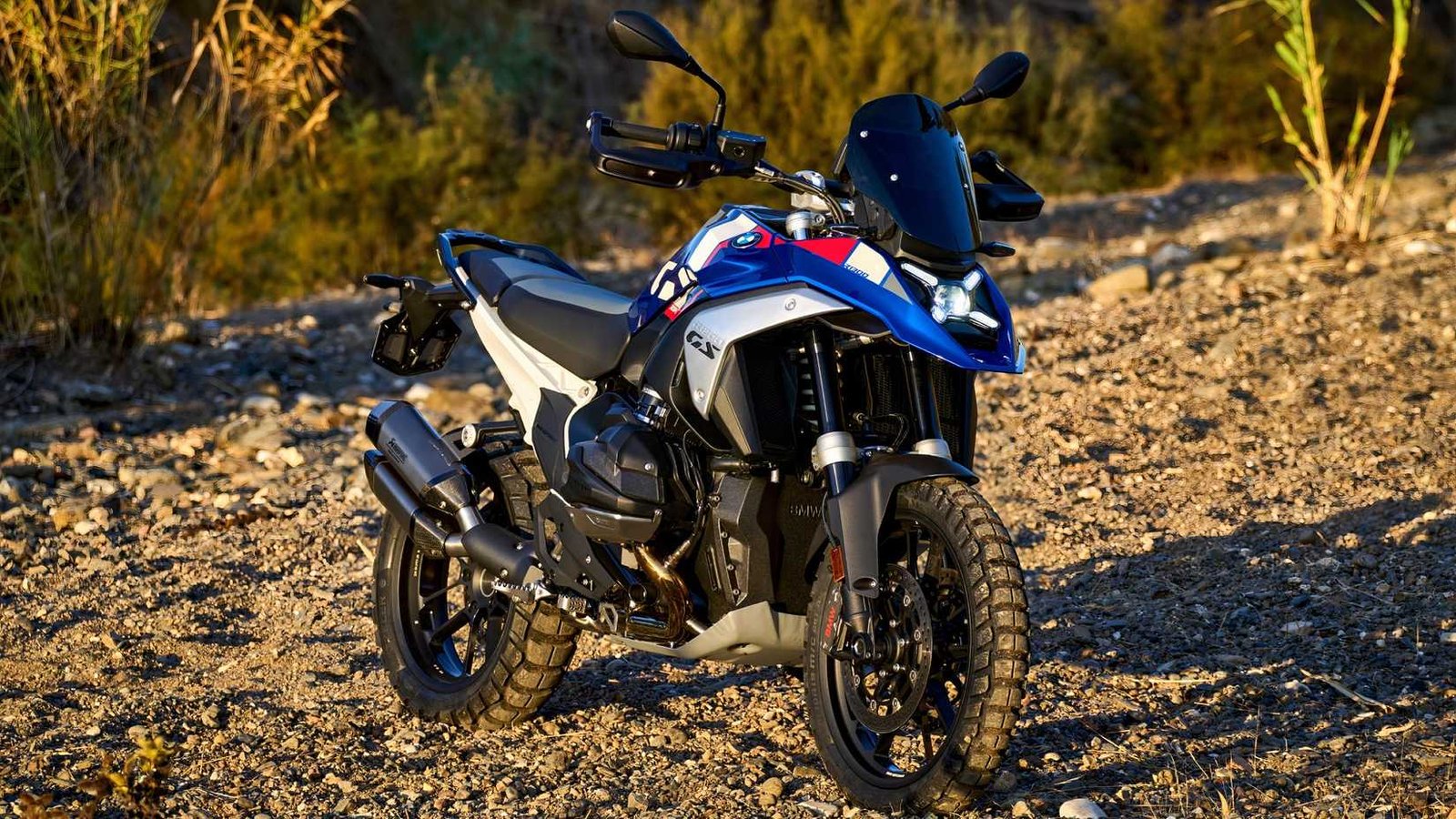
The current crop of ultra-premium ADVs is, without question, impressive. Bikes like the BMW R 1300 GS and the Ducati Multistrada V4 S represent genuine engineering achievements — loaded with semi-active suspension, cornering ABS calibrated by lean angle, connectivity suites, and enough processing power to embarrass a mid-range laptop. The problem is not the technology itself. The problem is what happens to that technology when you are 50 miles deep into a cellular dead zone and a dashboard error code decides to make an appearance.

These systems are sophisticated precisely because they are complex, and complexity introduces failure modes that simpler machines simply do not have. A semi-active suspension unit that loses communication with its control module does not just limit functionality — it can affect how the bike behaves dynamically. A radar emitter that gets caked in trail mud becomes a sensor that no longer sees what it is supposed to see. And if any of that happens somewhere remote, the tow is expensive, and the wait is long. The allure of having every conceivable feature is real, but so is the irony of owning the most technologically advanced adventure bike on the market and being stranded because of it.
Riders Trust The Suzuki V-Strom 650XT More Than Expensive ADVs
Base Price: $9,799

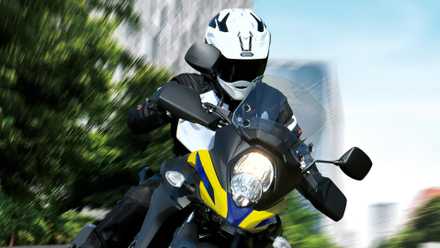
Suzuki’s answer to the question of what adventure motorcycling actually requires starts with a beak. The DR-BIG — Suzuki’s legendary Paris-Dakar rally machine from the 1980s — left behind more than a racing legacy. It left a design language, and the V-Strom 650XT borrows that face directly: the tall, beak-style fairing with vertically stacked headlights is an unmistakable reference to where this bike’s philosophy originates.

The V-Strom 650XT carries a base MSRP of $9,799, putting it in a completely different financial conversation than a BMW F 900 GS, a Triumph Tiger 900, or a Yamaha Ténéré 700. What makes the pricing argument even sharper is what Suzuki includes at that number. The 650XT ships with spoke-style wheels on blue-anodized aluminum rims laced with stainless steel spokes, Bridgestone Battlax tubeless radials on a 19-inch front and 17-inch rear, hand guards, and an engine cowl. On several competitors, getting to that same configuration requires ticking option boxes that add hundreds of dollars before you’ve even looked at panniers.
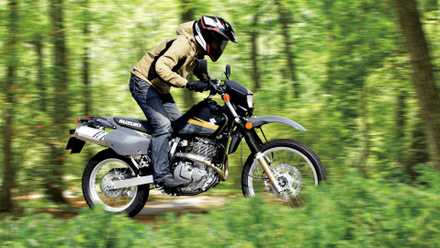
Here’s Why The Suzuki DR650 Is The Ultimate Do-It-All Motorcycle You Can Buy Today
There are many different types of motorcycles out there, made to do different kinds of riding. Here’s the one that can do them all.
Cockroach Reliability Adds To The Bike’s Trust Factor

The reason why adventure riders trust the V-Strom 650XT over its more expensive and arguably more capable rivals boils down to one thing: reliability. The bike is just easy to own and maintain in the long run. Everything from its V-twin engine to conventional underpinnings has been refined over the years and proven to be bulletproof in the long run. The V-Strom 650XT is a cockroach motorcycle that will survive the worst abuse and still keep running. That’s not to say you should test it, but it has the potential to survive everything from tight city traffic to clutch-burning off-road sessions.
The V-Twin Lump Is Almost 3 Decades Old

The V-twin engine, as good and versatile as it is, has also been tried-and-tested over the years. It made its debut in the first-generation SV650 back in 1999. Mind you, the SV650 is a bike known for taking beginner-rider abuse without breaking a sweat. On the V-Strom, the same engine trades cast-iron cylinder sleeves for Suzuki Composite Electro-chemical Material (SCEM) plated cylinders, a race-proven coating for better heat transfer and less weight. This gives the engine better efficiency. The engine also runs relaxed cam profiles, which further adds to its bulletproof nature.
Potential To Rack Up Serious Mileage Over The Years

Go on ownership forums, and you’ll run into many old V-Strom 650s with seriously high mileage on the odometer, with owners claiming they still run as good as new. The V-Strom 650XT is reported to easily surpass 60k miles with routine maintenance. We even found several examples with over 150k miles on the odometer, still running flawlessly according to the owners. Add to that the bike’s bare-bones nature, and there’s little to go wrong here. If you’re going to trust a bike to take you around the world without breaking down, the V-Strom 650XT is among the best options out there. Period.
The Forgotten Adventure Bike That Still Beats Modern Machines
This old-school do-it-all adventure bike still manages to hold its own against newer rivals.
A 645cc V-Twin That Rewards Throttle Honesty

The engine at the center of this motorcycle has earned its reputation the hard way: by not breaking. The liquid-cooled, DOHC, 645cc 90-degree V-twin is built on the same platform that powers the SV650, one of the most enduring and mechanically respected middleweight engines in history. The 90-degree crankshaft layout provides natural primary balance, which in practical terms means a distinctive, characterful pulse at low revs that never feels coarse and never demands revving to find usable power.
The fuel injection system runs SDTV (Suzuki Dual Throttle Valve) on 39 mm throttle bodies, with secondary valves controlled by a servo motor for smooth delivery across the rev range. A six-speed gearbox completes the package. This is not the most powerful engine in the mid-size ADV class, and Suzuki has never pretended otherwise. What it delivers instead is a broad, accessible torque spread that makes the bike feel competent in a remarkable range of situations without ever asking the rider to manage it aggressively.
Low RPM Assist And Easy Start Pay Off On The Field

Two features on the 650XT tend to get undersold in spec comparisons, but riders who use the bike extensively tend to mention both of them. The first is Low RPM Assist, which automatically adjusts engine speed during takeoff and at low speeds to prevent stalling. On loose gravel, slick clay, or in dense urban traffic where clutch and throttle management gets fussy, it is a genuine quality-of-life improvement. The second is the Suzuki Easy Start System, which allows the rider to fire the engine with a single, momentary press of the starter button while in neutral — no clutch required.
Engineering Choices That Breed True Field Confidence

The V-Strom 650XT sticks with straightforward hardware: telescopic, coil-spring, oil-damped forks up front and a link-type single shock at the rear, with rebound damping adjustment and an accessible hand-operated spring preload adjuster. Suzuki also gives the front suspension spring preload adjustment, which helps the bike adapt to different loads. The lack of semi-active complexity is not a limitation so much as a deliberate decision. Fewer moving parts, fewer electronic dependencies, fewer expensive surprises. By eliminating electronically managed damping, Suzuki has removed the primary failure points that have stranded riders on more expensive machines.
Spoked Wheels And Simple Braking

The wire-spoke wheel construction on the 650XT is worth noting beyond aesthetics. Spoked rims flex under impact in a way that cast aluminum cannot, distributing the shock of a rock strike or a sharp trail edge across the structure rather than concentrating it. That makes them more forgiving on rough terrain, and the tubeless tire fitment means a trail puncture becomes a roadside fix. The hand guards and lower engine cowl add meaningful protection for the levers and engine casings on unpaved surfaces.
Braking comes from a named supplier pair: dual Tokico 2-piston calipers working twin 310mm front discs, and a Nissin single-piston caliper on a 260mm rear disc. ABS monitors both wheels and adjusts braking force to match available traction. The setup is conventional, well-proven, and straightforward to service anywhere in the country.
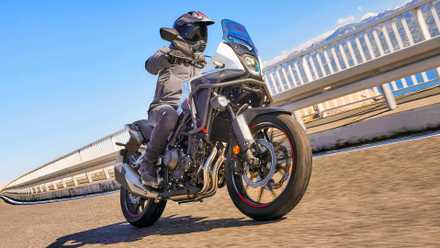
The Motorcycle That Feels Built For Real Life
Big adventure bikes are cool, but this approachable Honda adventure-tourer proves simpler, lighter motorcycles make more sense for real life.
The Instrument Panel Is Modest But Tells You Everything

This is where the age shows. The 650XT does not have a TFT color display, and there is no Bluetooth pairing, no turn-by-turn navigation integration, and no smartphone mirroring. What it does have is an LCD that covers everything a rider genuinely needs: odometer, dual tripmeter, gear position indicator, traction control mode readout, coolant temperature, ambient air temperature, fuel consumption display, fuel gauge, and a clock. All of it is accessible via the left handlebar switch without taking a hand off the grip.
Traction Control Ensures A Safe Riding Experience

Suzuki’s Advanced Traction Control System on the 650XT monitors front and rear wheel speeds, throttle opening, engine speed, and the currently selected gear simultaneously, adjusting engine output the moment slip is detected. The system operates across two modes, and there is an OFF setting — a choice that many more expensive ADVs either restrict entirely or bury deep enough in a menu that accessing it mid-ride becomes impractical.
Source: Suzuki Cycles